Barry O
The Republican Party is one of the two major contemporary political parties in the United States of America. It is often referred to as the Grand Old Party, GOP, and "Gallant Old Party". Founded in 1854 by anti-slavery expansion activists and modernizers, the Republican Party rose to prominence with the election of Abraham Lincoln, the first Republican president. The party presided over the American Civil War and Reconstruction but was harried by internal factions and scandals toward the end of the 19th century. Today, the Republican Party supports an American conservative platform, with further foundations in economic liberalism, fiscal conservatism, and social conservatism.
Former President George W. Bush is the 19th Republican to hold that office. The party's nominee for President of the United States in the 2008 presidential election was Senator John McCain of Arizona. It is currently the second largest party with 55 million registered members, encompassing roughly one third of the electorate. Since the 2010 midterm elections, the Republicans have held a majority in the United States House of Representatives.
Republican Party Presidents include: Dwight D. Eisenhower, Richard Nixon, Gerald Ford, Ronald Reagan, George H.W. Bush, George W. Bush.
The Democratic Party, since the division of the Republican Party in the election of 1912, has consistently positioned itself to the left of the Republican Party in economic as well as social matters. The economically left-leaning philosophy of Franklin D. Roosevelt, which has strongly influenced American liberalism, has shaped much of the party's economic agenda since 1932. Roosevelt's New Deal coalition usually controlled the national government until the 1970s.
In 2004, it was the largest political party, with 72 million voters (42.6% of 169 million registered) claiming affiliation. The president of the United States, Barack Obama, is the 15th Democrat to hold the office, and since the 2006 midterm elections, the Democratic Party is the majority party for the United States Senate.
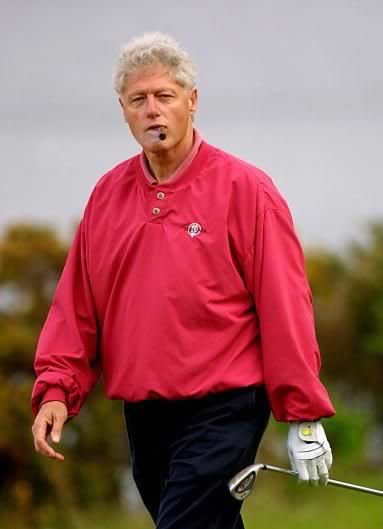
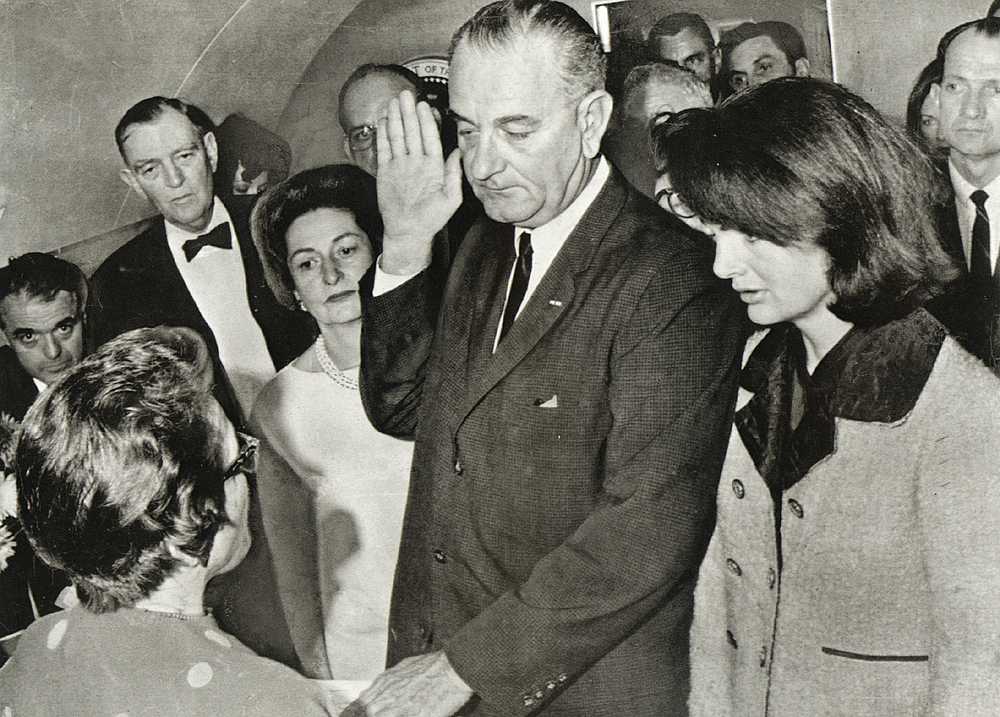
Democratic Presidents include: John F. Kennedy, Lyndon B. Johnson, Jimmy Carter, Bill Clinton, and Barack Obama.

 The New Deal Coalition was the alignment of interest groups and voting blocs that supported the New Deal and voted for Democratic presidential candidates from 1932 until the late 1960s. It made the Democratic Party the majority party during that period, losing only to Dwight D. Eisenhower in 1952 and 1956. Franklin D. Roosevelt forged a coalition that included the Democratic party, big city machines, labor unions, minorities (racial, ethnic and religious), liberal farm groups, white Southerners, people on relief, and intellectuals. The coalition fell apart in 1968, but it remains the model that party activists seek to replicate.
The era began in the severe depression of 1893 and the extraordinarily intense election of 1896. It included the Progressive Era, World War I, and the start of the Great Depression. The Great Depression caused a realignment that produced the Fifth Party System, dominated by the Democratic New Deal Coalition until the 1960s.
The central domestic issues concerned government regulation of railroads and large corporations ("trusts"), the protective tariff, the role of labor unions, child labor, the need for a new banking system, corruption in party politics, primary elections, direct election of senators, racial segregation, efficiency in government, women's suffrage, and control of immigration. Foreign policy centered on the 1898 Spanish-American War, imperialism (and Banana Wars), Dollar Diplomacy, the Mexican Revolution, World War I, and the creation of the League of Nations. Dominant personalities included presidents William McKinley, Theodore Roosevelt and Woodrow Wilson, and three-time presidential candidate William Jennings Bryan.


In 1824,1828, The Second Party System saw a split of the Democratic-Republican Party into the Jacksonian Democrats, who grew into the modern Democratic Party, led by Andrew Jackson, and the Whig Party, led by Henry Clay. The Democrats supported the primacy of the Presidency over the other branches of government, and opposed the Bank of the United States as well as modernizing programs that they felt would build up industry at the expense of the taxpayer. The Whigs, on the other hand, advocated the primacy of Congress over the executive branch as well as policies of modernization and economic protectionism. Central political battles of this era were the Bank War and the Spoils system of federal patronage.
The 1850s saw the collapse of the Whig party, largely as a result of deaths in its leadership and a major intra-party split over slavery as a result of the Compromise of 1850. In addition, the fading of old economic issues removed many of the unifying forces holding the party together.